
Accountants · Guide
ICAEW & ACCA Compliant Marketing: What an Accountant Can and Can't Say
 By Rank NI · 29 May 2026 Updated 19 June 2026
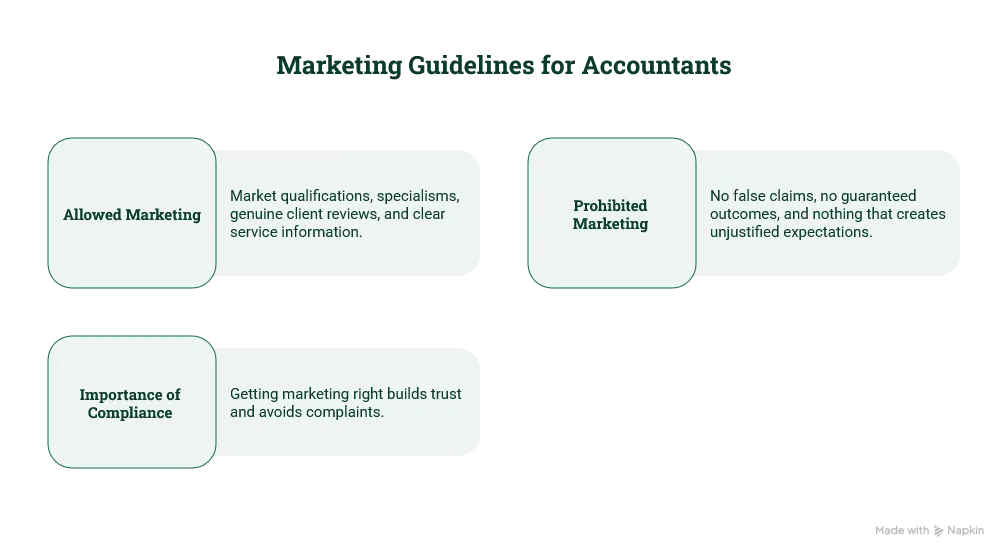
Short answer: the ICAEW, ACCA and Chartered Accountants Ireland codes all allow marketing but require it to be honest and not misleading, no false claims, no guaranteed outcomes, nothing that creates unjustified expectations. You can market your qualifications, your specialisms, genuine client reviews and clear service information. You can’t promise results you can’t ensure.
For a profession that’s rightly cautious, getting this right is the difference between marketing that builds trust and marketing that invites a complaint. Here’s the plain-English version.
(This is general guidance, not legal or regulatory advice. Always check the current code from your own professional body, it’s the definitive source.)
Why the rules exist, and why they help you
The professional bodies care that the public isn’t misled by exaggerated claims. So ICAEW, ACCA and Chartered Accountants Ireland all require marketing to be truthful and professional, and prohibit false or misleading statements.
That sounds restrictive. In practice it works in your favour, because the same honesty that keeps you compliant is what a sophisticated business-owner client is looking for. The client wary of a firm promising the world trusts the practice that’s clear, specific and measured.
What you generally can say
- Your qualifications and registration: ICAEW, ACCA, Chartered Accountants Ireland, AAT, your HMRC agent status. The strongest trust signal you have.
- Your specialisms, described accurately: Windsor Framework VAT, cross-border NI/ROI, MTD, agricultural, the work you genuinely do.
- Genuine client reviews about their experience, honestly gathered.
- Clear service information and the way you work (fixed fees, plain English, quick response).
- Factual results, where you can stand them up, but framed carefully and never as a guarantee.
What gets practices into trouble
- Guaranteed outcomes: “we’ll cut your tax bill”, “we guarantee a refund”.
- Misleading comparisons or unverifiable savings claims.
- Creating unjustified expectations about service levels or results.
- Incentivised or aggressive review solicitation, paying for reviews or pressuring clients.
This is also where a generic marketing agency creates risk. An agency promising you “guaranteed #1 in 30 days” is making a claim that’s both untrue and, if it shapes your client-facing copy, a route to a code breach. The agency that doesn’t know your code will hand you marketing that ranks and quietly exposes you.
How to market within the rules and still win clients
You market expertise, service and genuine experience, not promises:
- Rank for the specialisms clients search, with accurate, useful pages, see marketing for accountants.
- Win the map pack with a complete profile and honest reviews, see Google Business Profile for accountants.
- Own the NI-only searches with genuine content, see Windsor Framework SEO.
None of that needs a single claim a professional body would object to, and all of it brings in retained clients.
Why this is the question to ask an agency
If you’re choosing who builds your marketing, ask how they handle the ICAEW or ACCA rules. A generalist who’s never heard of them will write copy that ranks and then exposes you to a complaint. An agency that treats the code as the brief, as we do, builds marketing that’s both effective and safe. That’s the whole approach behind our accountant SEO agency positioning and the wider SEO for accountants in Belfast.
Book a free 10-minute audit and we’ll review your current marketing for both ranking and compliance, and tell you straight where it stands.